
Mark T., a 34-year-old from Tampa Bay, Florida, made a fateful decision in November 2024. He purchased six cloned debit cards for $480 in cryptocurrency from a dark web marketplace, hoping to withdraw cash quickly. His initial success at three ATMs yielded him $4,200, but his luck ran out at the fourth ATM, leading to his arrest within 15 days. This narrative isn't merely about Mark's choices; it illustrates how modern investigative techniques can unravel seemingly anonymous crimes.
Key takeaways
- Understanding carding mechanics is essential for prevention.
- ATM cameras serve as crucial evidence in investigations.
- Invest in anti-fraud mechanisms for better security.
- Anonymity in cryptocurrency is not guaranteed.
- Prompt reporting by victims can limit fraud impact.
- UNDERSTANDING CARDING: THE MECHANICS
Carding—the illegal buying and selling of stolen banking information—has a well-defined process, and Mark's actions exemplified that classic approach. Here’s how it typically unfolds:
- Data Collection: Criminals first obtain magnetic card data through methods like skimming devices on ATMs, phishing, or purchasing card dumps on dark web markets.
- Card Creation: This stolen data is then embossed onto blank plastic cards, giving them the appearance of legitimate cards with names, expiration dates, and card numbers.
- PIN Acquisition: If the original PIN is compromised via a hidden camera or overlay keypad, the criminal can use the card for cash withdrawals.
- Cash Withdrawal: The buyer quickly withdraws cash from an ATM, often before the victim is even aware of the theft.
- Money Laundering: Finally, the cash is laundered, typically through Bitcoin ATMs or peer-to-peer exchanges to obscure the trail of funds.
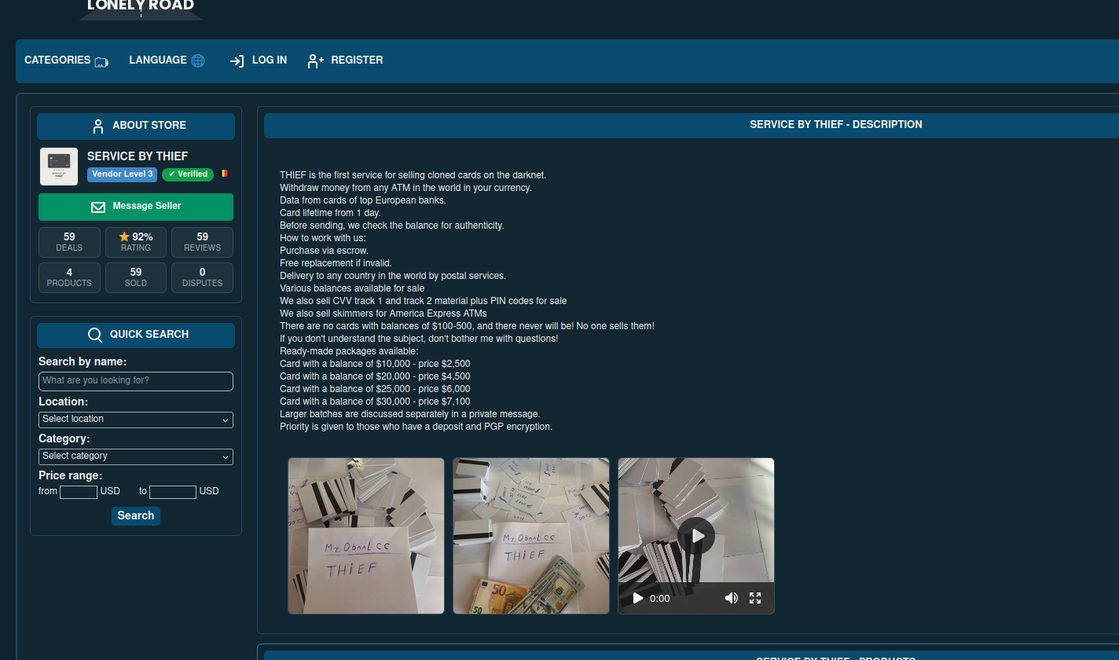
Mark acquired his cards on a dark web site, leveraging Monero for payment due to its reputation for anonymity. The cards arrived in unmarked packaging, and everything seemed in order. However, he overlooked a critical aspect: ATMs are equipped with surveillance capabilities that can capture crucial evidence against criminals.
How to tell if a card reader has a skimmer is essential knowledge for anyone using ATMs, as the risk of falling prey to such schemes is ever-present.
- THE UNEXPECTED EVIDENCE: ATM CAMERAS
Modern ATMs serve as more than just cash dispensers; they are sophisticated surveillance systems. Here's what you typically find inside:
- Built-in Camera: Captures clear images of users at 1080p resolution, often including infrared for night usage.
- Secondary Hidden Camera: Some models contain an additional camera aimed discretely from a different angle.
- Transaction Logs: Every transaction, including the time, amount, and card number, is meticulously logged.
- Geolocation Data: ATMs track their precise location, sending coordinates to the bank.
- Network Logs: These document all requests made to the bank, including data about connections.
When Mark approached the fourth ATM, its camera recorded him perfectly—no disguise, no attempt to conceal his identity. He withdrew $700, and that brief 23 seconds of footage ultimately provided law enforcement with a decisive piece of evidence.
Why did Mark fail to consider ATMs as evidence-gathering tools? Many criminals mistakenly believe that actions in the online realm afford them complete protection from ramifications in the real world. However, this is a misconception, as ATMs bridge the gap between digital crimes and physical evidence, marking the end of anonymity.
- THE INVESTIGATION TIMELINE
Mark’s downfall was swift and methodical. Here’s a breakdown of the investigation that ultimately led to his arrest:
- Day 1: November 2024—Three victims from Florida, Georgia, and North Carolina report unauthorized withdrawals to their banks; the banks freeze the affected cards and initiate an internal fraud alert.
- Day 3: The bank's fraud detection algorithms identify a pattern among the withdrawals, flagging the incidents for further investigation.
- Day 5: A referral to the U.S. Secret Service (USSS) is made, as they handle financial crimes. The USSS analyst requests ATM logs and video footage.
- Day 8: The video from the fourth ATM reveals Mark's face, which the Florida Department of Public Safety matches with a driver's license database. The analysis of transaction locations indicates that all withdrawals occurred within a 40-mile radius of Mark’s residence.
- Day 12: A warrant is obtained to trace Mark’s digital activities, revealing that he visited Tor exit nodes around the time he made his purchase.
- Day 14: Law enforcement executes a search warrant at Mark’s home, seizing six blank cards, a magnetic stripe read/write device, a laptop with digital traces of his activities, $3,200 cash, and the original shipment packaging.
- Day 15: Mark is arrested; during questioning, he admits to using four of the six cards, acknowledging the other two were already blocked by the bank by the time he attempted to use them.
This timeline shows how quickly investigations can progress when technology and crime intersect. The effectiveness of the USSS also underscores the importance of timely reporting by victims to limit damage.
- NUMERICAL BREAKDOWN OF THE CASE
The following summary outlines the monetary losses, expenses, and court-imposed penalties that Mark encountered after his arrest:
Category Details Period of supervised release 3 years Combined penalty and repayment $22,000 American passport book price $480 Term of federal incarceration 5 years (60 months) Interval between first withdrawal and detention 15 Number of withdrawals 4 Overall sum retrieved $4,900 Mark’s case ultimately demonstrates that the financial rewards of such criminal activity are far outweighed by the penalties and repercussions that follow.
How to check for credit card skimmers is essential knowledge for anyone engaging in financial transactions, highlighting the critical need for caution in these spaces.
Mark made his purchase from a dark web marketplace that illustrates the risks associated with such transactions.
- WHY CRYPTO FAILED TO SHIELD MARK
Despite paying for the cloned cards using Monero, a cryptocurrency designed for anonymity, Mark still faced exposure due to a critical misstep. The investigation found several weak links in his plan:
- Centralised Exchange Usage: Mark bought Monero on a centralised exchange, completing Know Your Customer (KYC) verification by providing his passport and selfie. This action linked his identity to his cryptocurrency transactions, which proved detrimental.
- Timing of Transactions: The close timing of his Monero purchase, card purchase, and ATM withdrawals created a clear timeline that investigators could trace back to him.
- Physical Evidence: The seized cards matched data from the stolen victim accounts, providing irrefutable proof of wrongdoing.
- Video Evidence: The ATM footage provided a direct link between Mark and the crime scene, evidencing his identity without doubt.
Mark's case serves as a cautionary tale for those who believe that cryptocurrency can fully protect their identity in illicit transactions. The reality is that, until centralised KYC processes exist, anonymity remains a facade that can easily be penetrated by law enforcement.
- MARK’S CRUCIAL ERRORS
Several critical missteps led to Mark’s arrest and conviction:
- Proximity of Transactions: Mark made all withdrawals within a 40-mile radius of his home, immediately raising flags in anti-fraud systems.
- Lack of Disguise: He approached the ATMs without any disguise, allowing facial recognition technology to easily identify him.
- Using a Centralised Exchange: Completing KYC linked his identity directly to the Monero purchase, making it simple for law enforcement to connect the dots.
- Home Storage of Evidence: Items found in his apartment, such as the cards and magnetic stripe reader, served as undeniable evidence of his activities.
- Cash on Hand: The $3,200 seized matched the bills dispensed by the ATMs, further implicating him.
- Rapid Withdrawal Pace: Completing multiple withdrawals in a short time frame allowed anti-fraud systems to act quickly; spreading transactions out might have delayed detection, but he would still be caught on video.
- SECURITY TAKEAWAYS
Mark’s experience is a stark reminder of how robust the security systems are against carding and similar crimes. Key lessons include:
- Anti-Fraud Mechanisms are Effective: Banks employ sophisticated systems that automatically flag suspicious patterns. Investing further in these technologies is crucial for ongoing security efforts.
- Physical and Digital Forensics are Interconnected: Evidence from physical sources, like ATM videos, needs to be harmonised with digital transaction logs to build a strong case.
- Anonymity in Cryptocurrency is a Myth: Using KYC exchanges exposes identities, making full anonymity impossible. Both entry and exit points in cryptocurrency transactions leave traces.
THE FINAL VERDICT
In March 2025, Mark T. pled guilty to fraud and related activities concerning access devices and money laundering. The U.S. District Court for the Middle District of Florida sentenced him to 60 months in federal prison, accompanied by three years of supervised release and a $22,000 fine. The judge remarked that while Mark was not the mastermind, he bore the brunt of the consequences as the final link in the chain. The true offenders often remain hidden further up the ladder, creating a challenge for law enforcement that requires diligence and innovation to address.
Mark’s story not only highlights the importance of understanding the risks associated with the dark web but also the necessity of being vigilant in protecting personal financial information. Everyone should learn how to spot potential threats and safeguard against the ever-evolving nature of cybercrime.
 Hidden Wiki Video: Exploring Visual InsightsDiscover the Hidden Wiki video, offering visual insights into dark web resources and how to navigate them safely.
 Deep Web: An In-Depth ExplorationDiscover the deep web: understand its structure, purpose, and how to navigate safely for valuable information.
 www Dark Web Com Online: Accessing SafelyLearn how to access www dark web com online safely with essential tips for beginners to navigate securely and avoid common pitfalls.